
Why Is the Superclásico So Famous?
The Superclásico is the name given to matches between Boca Juniors and River Plate, Argentina’s two biggest and most successful football clubs. It is the country’s most famous domestic fixture and is widely considered one of the most important rivalries in world football. For international supporters it is seen as the iconic face of Argentine passion for football.
Why does one match attract so much attention? Why are Boca and River followed so passionately across Argentina? And how did a rivalry between two clubs from Buenos Aires become a global symbol of South American football?
Part of the answer lies in the clubs’ size. Boca and River have won more major domestic honours than any other Argentine teams, developed generations of elite players and built enormous supporter bases extending far beyond their home city. Together, the clubs occupy a central position in Argentina’s football culture. Even people who do not support either side are rarely indifferent when the Superclásico is played.
The rivalry also has unusually deep historical roots.This is not a rivalry that was invented by television or by marketing departments. It grew out of the streets, the docks, the neighbourhoods and the social differences of Buenos Aires more than a century ago. Boca and River were both founded in the La Boca area of Buenos Aires in the early twentieth century. River later moved to a different part of the city, and the clubs gradually developed contrasting public identities. Boca came to be associated with a popular, working-class image, while River cultivated a reputation for wealth, elegance and expensive players. These descriptions have never told the complete story, but they have helped shape the mythology of the rivalry.
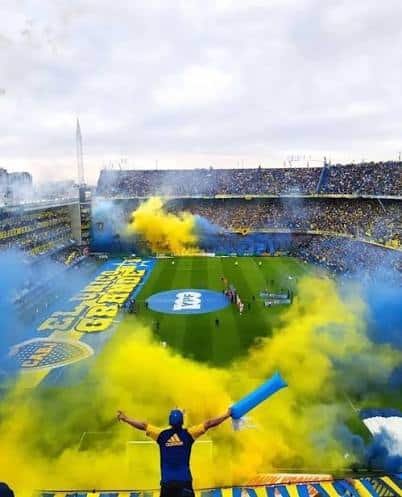
The images are world famous: the blue-and-yellow smoke of La Bombonera, the sea of red and white in the Monumental, the players with tears in their eyes, the fans who look like they are living the most important day of their lives. For millions of Argentines it is the purest expression of identity, class, neighbourhood pride and pure football emotion. When these two clubs meet, the country stops.
Its global fame has been strengthened by unforgettable matches, intimidating stadium atmospheres and success in the Copa Libertadores. The rivalry reached an unprecedented level in 2018, when Boca and River met in the Libertadores final.
The Superclásico is therefore not famous for one single reason. It combines sporting success, local history, mass support, social mythology and continental importance. Understanding those elements helps explain why Boca against River is never treated as just another football match.
The Origins of the Rivalry
The Superclásico did not begin as a carefully constructed rivalry. It grew out of geography, migration and the rapid expansion of Buenos Aires at the start of the twentieth century.Both clubs were founded in the same neighbourhood: La Boca. Boca Juniors were established in 1905 by a group of Italian immigrants, most of them from Genoa. The club took its name from the working-class port area where it was born, a district of warehouses, tenements and dockworkers. River Plate had been founded a few years earlier, in 1901, also in La Boca, by young men from a more mixed background. For a short time the two clubs shared the same streets and the same muddy pitches.
The clubs are believed to have played friendly matches before meeting officially, but their first recognised competitive encounter took place on 24 August 1913. The match was held at Racing Club’s stadium in Avellaneda because River’s ground had been damaged by a cyclone. Around 7,000 spectators watched River win 2–1 in a match that already contained signs of the hostility to come. Boca played much of the contest with ten players after an injury, while a confrontation late in the game spread from the pitch to parts of the crowd.
The geographical foundations of the rivalry changed during the following decades. While Boca remained closely connected to La Boca, River gradually moved away from the neighbourhood. The decisive break came in the 1920s. As River Plate grew in ambition and membership, the club looked for a more spacious and prestigious location. In 1923 it moved north to the neighbourhood of Núñez, on the edge of the city. The new ground would eventually become the Estadio Monumental. Boca remained in La Boca and later built La Bombonera, a stadium squeezed tightly between the surrounding houses.This physical separation helped the clubs develop contrasting public identities.
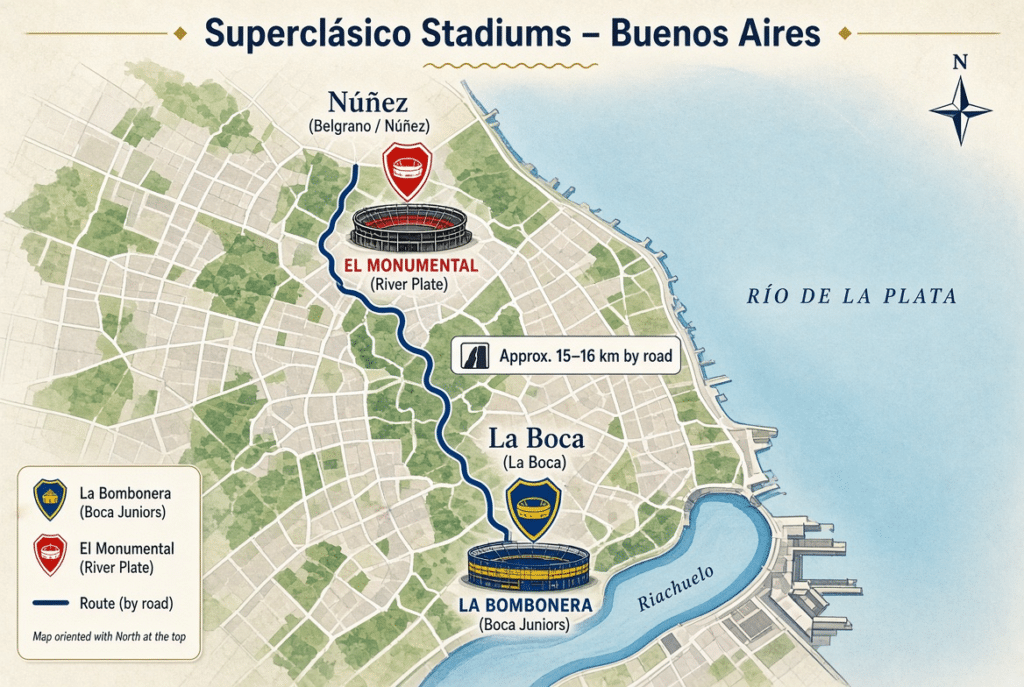
Boca’s attachment to the port district, together with the area’s large Italian immigrant community, contributed to its image as the popular club of workers and immigrants. Boca supporters became known as Xeneizes, a word derived from the Genoese roots of many La Boca residents
River, meanwhile, acquired the nickname Los Millonarios during the professional era after spending heavily on prominent players. Its relocation northwards and later establishment in Núñez strengthened the perception that River represented wealth, ambition and a more affluent section of the city. The contrast produced a powerful story: Boca as the passionate club of the port and River as the elegant club of the wealthy north.
Boca came to be seen as the club of the people: immigrant, working-class, loud and defiant. River acquired the nickname Los Millonarios after a series of expensive signings in the 1930s, and the label stuck. The contrast was never as clean as the mythology suggests. River has always had large numbers of working-class supporters, and Boca has long attracted fans from every social level. Yet the story proved powerful. It gave the rivalry a narrative that was easy to understand and easy to feel.
Stadiums
La Bombonera
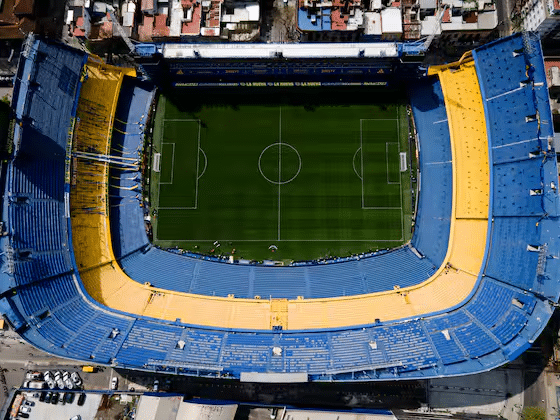
Officially named Estadio Alberto J. Armando after the long-serving Boca Juniors president Alberto José Armando, is one of the most iconic stadiums in world football. Opened on 25 May 1940 in the working-class neighbourhood of La Boca, it currently holds around 57,000–58,000 spectators. The ground is famous for its unusual shape: three steep stands packed tightly around the pitch and one flat side. A major renovation in 1995–96 added a fourth tier and modern facilities while preserving its distinctive character. The design creates an intense, almost claustrophobic atmosphere that many visiting players describe as overwhelming. When Boca Juniors play at home, the stadium seems to shake under the weight of the fans. The blue-and-yellow colours, the constant noise and the proximity of the supporters to the pitch give La Bombonera a unique identity. It is not the largest stadium in Argentina, but few grounds in the world generate such raw emotion.
El Monumental
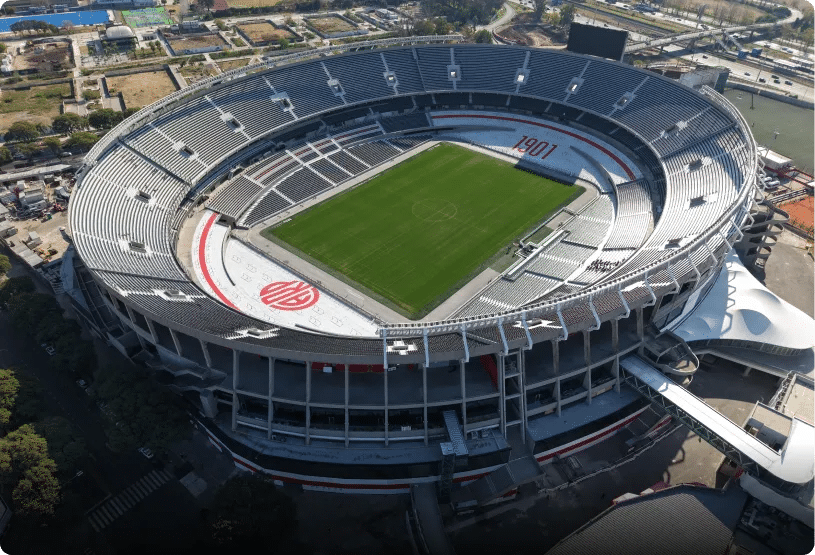
Officially named Estadio Más Monumental is the largest stadium in Argentina and the home of River Plate. Opened on 26 May 1938 in the northern neighbourhood of Núñez, it currently has a capacity of just over 85,000 spectators. The stadium was significantly upgraded for the 1978 World Cup and underwent major renovations between 2020 and 2025 that removed the running track and brought the stands closer to the pitch. Where La Bombonera feels compact and intense, the Monumental is open, expansive and imposing. It regularly hosts matches for both River Plate and the Argentine national team, and has been the stage for historic Copa Libertadores nights and countless Superclásicos. Its wide stands create a grand rather than intimate atmosphere. For River supporters, the Monumental represents prestige, tradition and the club’s status as one of Argentina’s great institutions. In the 100 years anniversary of the World Cup in 2034 El Monumental is planned to host one of the three opening matches in South America before the rest of the tournament is to be played in Spain, Portugal and Morocco.
The Matches That Defined the Rivalry
Over more than a century of meetings, certain Superclásicos have become part of Argentine football folklore. They are the games that supporters still argue about decades later, the nights when the rivalry felt larger than the sport itself.
One of the earliest landmarks came in the professional era, but the fixture’s modern mythology was built across decades of dramatic league encounters. Big wins, last-minute goals and controversial decisions all fed the legend. Matches in the 1960s and 1970s often carried title implications, while the 1980s and 1990s produced unforgettable individual performances.
Diego Maradona and the Superclásico hold a special place in that history. During his first spell at Boca in 1981 he scored memorable goals against River, including a brilliant individual strike in a 3-0 win at La Bombonera when he left goalkeeper Ubaldo Fillol on the ground. He also found the net in other meetings that year. Many years later, on 25 October 1997, Maradona played his final official match in a Superclásico at the Monumental, famously subbed off for the up and coming star Juan Roman Riquelme. Boca came from behind to win 2-1, and the image of Maradona celebrating that victory remains one of the most emotional moments associated with the rivalry.
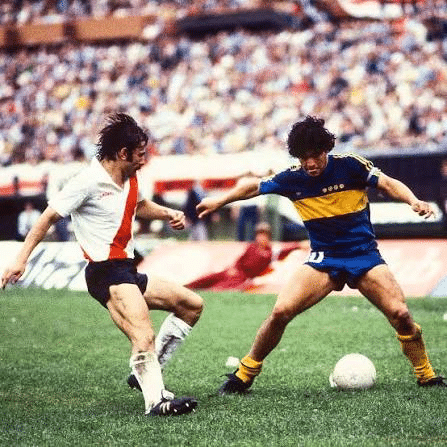
The rivalry has also produced extraordinary scorelines. Boca’s 5-1 victory at the Monumental in 1982 remains one of their most celebrated away performances. High-scoring thrillers, such as the famous 5-4 encounter played at Vélez in 1972, showed how quickly a Superclásico can swing from control to chaos.
No match, however, has defined the Superclásico for a global audience quite like the 2018 Copa Libertadores final. For the first time, Boca and River met in the decisive stages of South America’s most prestigious club competition. The first leg at La Bombonera ended 2-2. The second leg was originally scheduled for the Monumental, but violence outside the stadium forced its postponement. In an unprecedented decision, the match was moved out of Buenos Aires, out of Argentina and out of South America to the Santiago Bernabéu in Madrid.
On 9 December 2018, in front of a worldwide audience, River came from behind to win 3-1 after extra time. Darío Benedetto gave Boca the lead before Lucas Pratto equalised. In extra time, Juan Fernando Quintero scored a spectacular long-range goal, and Gonzalo “Pity” Martínez added a late third. River lifted the trophy on aggregate, sealing one of the most dramatic chapters in the history of the competition.
That final elevated the Superclásico beyond Argentina. It confirmed what local fans had always believed: when Boca and River meet with something major at stake, the occasion can feel unlike any other fixture in world football. The images from Madrid with the tension, the goals, the exhaustion joined a long list of moments that continue to shape how the rivalry is remembered.
These matches do not simply add to a head-to-head record. They become stories told in bars, family arguments and highlight reels for generations. In the Superclásico, history is never far from the present.
The Statistics
In official matches the Superclásico record is closely contested. Boca Juniors lead with 94 wins to River Plate’s 88, with 84 draws. Boca have also scored more goals (342 to 323). The margin remains small enough that neither side can claim permanent dominance.
The all-time top scorers in the fixture reflect the rivalry’s history. River’s Ángel Labruna leads with 16 goals, followed by Oscar Más (12). Boca’s highest scorer is the Brazilian Paulo Valentim with 10 goals, just ahead of Martín Palermo (9).
Beyond the head-to-head, the clubs’ overall achievements are endlessly debated. River hold the edge in Argentine league titles, counting more Primera División championships than Boca. Boca, however, lead in the Copa Libertadores with six titles to River’s four, and they also hold an advantage in Intercontinental Cup / Club World Cup successes (three to one). When all official domestic and international trophies are combined, the totals remain extremely close, with each club able to highlight different strengths depending on which competitions are prioritised.
This statistical balance mirrors the rivalry itself. One side can point to domestic consistency, the other to continental glory. In the Superclásico, numbers matter but they never settle the argument.
Atmosphere
The Superclásico is defined not only by the players on the pitch but by the two stadiums that stage it. La Bombonera and El Monumental create completely different experiences, and that contrast is part of what makes the rivalry so compelling.
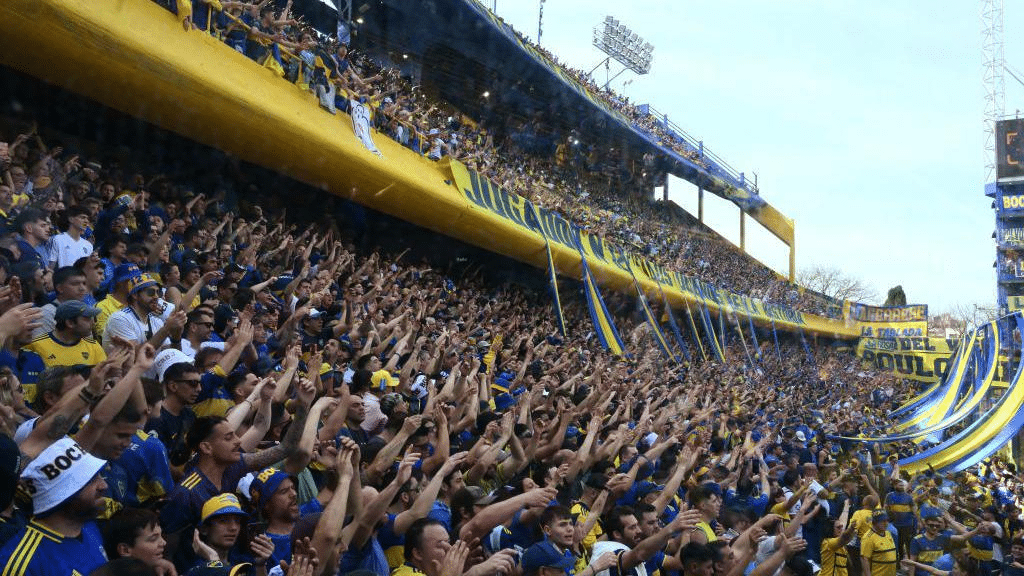
La Bombonera is intense, compact and overwhelming. The steep stands rise almost vertically, placing the supporters right on top of the pitch. When the stadium is full, the noise seems to come from every direction at once. The famous “vibration” of the ground is not a myth, it is shaking. The colours are constant: blue and yellow flags, smoke and continuous chanting. Matches at La Bombonera often feel closer to a siege than a sporting event. For Boca supporters, the stadium is an extension of the neighbourhood itself — working-class, defiant and unapologetically loud.
El Monumental offers a different kind of spectacle. Larger and more open, it can hold over 85,000 people and creates a sense of scale rather than claustrophobia. The red-and-white of River fills the stands in wide, sweeping sections. The atmosphere builds more gradually but can become enormous when the stadium is at capacity. The Monumental has a more monumental quality in every sense — grandeur, space and a feeling of occasion. River fans often describe it as a cathedral of Argentine football, a place where the club’s history and prestige are on full display.
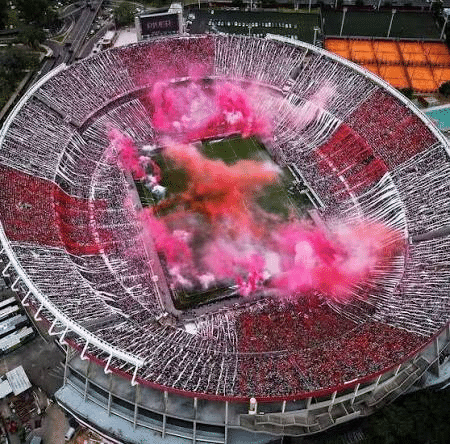
The two atmospheres reflect the popular images of the clubs. Boca’s home feels intimate and confrontational. River’s home feels expansive and imposing. One generates pressure through proximity and noise; the other through size and presence.
When the fixture switches between the two stadiums, the character of the game changes with it. At La Bombonera the match often feels faster and more aggressive. At the Monumental it can feel heavier and more theatrical. Together they form two halves of the same intense experience.
More Than a Football Match
The Superclásico has never been only about ninety minutes of football. It carries layers of identity, history and emotion that stretch far beyond the pitch. The sense of belonging to a neighbourhood, a social story, a family tradition or simply a way of seeing the world. Supporting Boca or River is often inherited rather than chosen, and the result of the match can colour conversations for weeks.
A victory brings pride that extends well past the final whistle. A defeat leaves a mark that supporters carry longer than ordinary losses. The match becomes a reference point in personal and collective memory.
Internationally, the Superclásico has come to symbolise the passion of South American football. The images of packed stands, the noise, the tension and the drama travel easily across borders.
In the end, the Superclásico endures because it is never fully resolved. Statistics can be counted, trophies can be compared and classic matches can be replayed, but the rivalry itself remains open. Every new encounter offers the chance to rewrite the latest chapter. That is why Boca versus River continues to feel larger than a football match. It is a living contest of identity, memory and emotion that renews itself every time the two teams walk onto the pitch.